


Hardwood Firewood Guide: Species, Characteristics & Tips
Updated: Nic SnellHardwood is derived from dense tree species like ash, oak, beech and silver birch, and is hugely popular as firewood because it burns hotter and longer than softer woods. When properly kiln-dried, hardwood logs provide consistent heat, a cleaner burn and excellent performance. At Certainly Wood, our premium kiln-dried hardwood logs are responsibly sourced from Britain and Europe. Read our guide to learn how to get the best from each species.
Explore our full range of kiln-dried hardwood logs for more inspiration.
Do All Types Of Firewood Burn The Same?
All species of firewood burn differently. Each type of wood has distinct burn characteristics that affect ignition, flame behaviour, and heat output. While all logs that have been kiln-dried burn efficiently, each species performs differently in use. Some are quick and easy to light, making them ultra-convenient, while others take longer to establish but deliver a longer-lasting, more sustained heat.
The density of your firewood directly affects its heat output and burn duration. Denser woods like oak and beech contain tightly packed wood fibres, giving them a higher ‘calorific’ value. This means they release more heat energy during combustion and burn more slowly, resulting in a longer, more sustained fire compared to less-dense woods.
What Are The Main Types Of Hardwood Firewood?
The main types of hardwood logs sold at Certainly Wood are ash, oak, and birch. Each species offers different burn characteristics depending on your needs. Ash lights easily and burns steadily. Oak is very dense, for long-lasting heat and birch is quick to ignite with bright, lively flames. Here’s more information on each:
1. Ash Firewood
Ash is often referred to as the ‘King of Firewood’ and is popular with those seeking an easy-to-manage fire. It offers a strong calorific value of around 19 MJ/kg and a reliable, steady burn. Ash logs ignite quickly and burn efficiently, though slightly faster than denser hardwoods like oak or hornbeam. A distinctive feature of ash is its pale, almost white inner wood when freshly split, making it easy to identify.

Pros of ash firewood:
- Easy ignition: Lights quickly with minimal effort, making fire-starting simple and reliable.
- Steady, consistent burn: Produces an even heat output, ideal for warming a home.
- Versatile performance: Suitable for stoves, open fires, and outdoor use, balancing convenience and efficiency.
Cons of ash firewood:
- Slightly faster burn than denser hardwoods: Burns slightly quicker than oak, beech, and hornbeam, so it will be easier to get going but may require more frequent refuelling over long periods.
2. Oak Firewood
Oak reigns supreme as a dense hardwood, known for its exceptional calorific value (around 18–20 MJ/kg) and long burn time. Its density allows it to burn slowly and evenly, producing a steady, intense heat, making it ideal for long winter evenings where consistent warmth is essential.

Pros:
- Exceptional heat output: Delivers a powerful, long-lasting warmth thanks to its high density and calorific value.
- Slow, controlled burn: Burns steadily over time, reducing the need for frequent refuelling.
- Highly efficient for overnight use: Ideal for maintaining heat over extended periods, such as long winter evenings.
Cons:
- Slower to ignite: Its dense structure means it can take longer to catch, often requiring kindling or a faster-lighting wood like birch or ash to get started.
Tip: Start with smaller logs to build a strong, hot base before adding larger oak logs. Keep the fire well-established and vents open longer to maintain enough heat for efficient burning.
3. Silver Birch Firewood
Silver Birch is a hardwood with a faster-burning profile, offering a calorific value of around 15–17 MJ/kg and a good level of heat output. It’s cheaper to buy because it burns more quickly, making it a cost-effective option. While it burns around 20–25% faster than denser species like oak, beech, and hornbeam, it also lights easily and is ideal for creating quick, lively fires.

Pros:
- Quick and easy to light: Ideal for getting a fire going fast with minimal effort.
- Lively, instant heat: Produces a bright flame and fast warmth, perfect for evenings after work.
- Great value: Typically priced lower than other hardwoods, making it a cost-effective choice.
Cons:
- Quicker burn rate: Requires more frequent replenishment than denser hardwoods.
What's The Best Way To Light Dense Firewood?
The best way to light dense firewood is to use the ‘top-down’ method, which allows for optimum airflow. This approach, recommended by stove manufacturers, places the flame at the top of the fire, helping to heat the flue quickly and establish a strong draw. The result is a cleaner, more efficient burn, especially important for dense woods like oak and beech. Here are two of the best options:
| Using A KindleFlamer | Using Kindling & Flamers |
 |
 |
| Place two small logs side by side on the grate of your woodburner. Place a KindleFlamer in the channel between the logs. Place one or two smaller logs across the KindleFlamer, then light. | Place two small logs side by side. Stack 6-8 sticks of kiln-dried kindling in a Jenga formation and place one Flamer in the middle. Add two small logs at an angle over the kindling. |
Browse high-quality kindling & natural firelighters for simple firelighting.
How To Maintain An Efficient Fire
Here are our top tips for maintaining the most efficient fire:
- Refuel at the right time: Add logs before the fire dies down to keep a strong, consistent heat base.
- Maintain good airflow: Ensure a steady oxygen supply so the fire burns cleanly and efficiently.
- Adjust vents as needed: Once established, reduce airflow slightly to control the burn and maximise efficiency.

Firewood Moisture Contents FAQs

- How do moisture levels affect firewood performance?
Moisture levels affect firewood performance by determining how efficiently the wood burns. Lower moisture content means less energy is wasted evaporating water, allowing more heat to be produced. Kiln-dried logs with less than 20% moisture burn hotter, cleaner, and more efficiently. They’re also easier to light and produce less smoke.
- Are moisture meters accurate?
Moisture meters are generally accurate as a guide, but lower-cost models may not always provide precise readings. They’re best used as an indicator of moisture levels rather than an exact measurement, with results varying depending on how and where the wood is tested.
- How should you measure moisture content in firewood?
You should measure moisture content by testing multiple logs and surfaces to get a reliable average. For the most accurate reading, split a log and measure the moisture on the freshly exposed inner face, as well as the outer surface, since the inside often retains more moisture.
- Why do moisture readings vary within a log?
Moisture readings vary within a log because wood dries from the outside in. As moisture moves from the centre toward the surface during the drying process, the outer layers become drier first while the core retains more moisture. This variation is more noticeable in dense species like oak and beech, where slower drying can lead to higher moisture levels inside the log compared to the surface.
- What moisture levels are acceptable for burning?
The acceptable moisture level for firewood is 20% and below, as this ensures efficient, clean combustion. While the outer surface may read lower and the centre slightly higher, logs are still suitable to burn as long as the overall moisture content remains under this threshold.
For consistently low moisture and reliable performance, explore our kiln-dried firewood range.
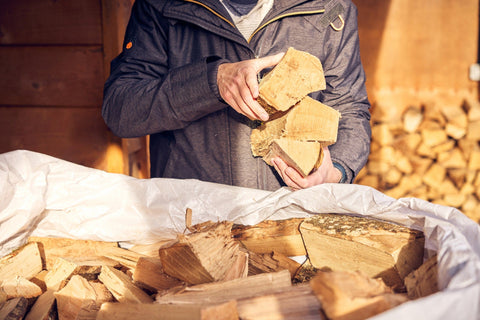
The best firewood depends on your needs, with ash offering easy use, oak and beech providing long burns, and birch delivering quick heat. Understanding these differences allows you to manage your fire more effectively and get the most from your logs. Be sure to store your firewood correctly to keep it in optimum condition.
References:
- Information on calorific value: https://cdn.forestresearch.gov.uk/2022/02/fr_bec_wood_as_fuel_technical_supplement_2010.pdf
- Information on calorific value: https://cfnielsen.com/faq/what-is-the-calorifc-value-of-wood/